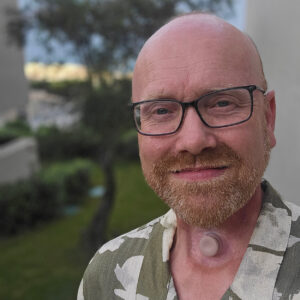
Common side effects from Head and Neck Cancer treatment...
If breathing is difficult, the surgeon will perform a tracheostomy. An artificial opening (stoma) through the neck into the windpipe (trachea) will be created, which allows you to breathe.
After most types of surgery, you will have a temporary stoma. If you have a total laryngectomy, you will have a permanent stoma. If you are having another surgical procedure, the tracheostomy is usually done at the same time under general anaesthetic.

+ Tracheostomy Tube
If you have a tracheostomy tube, your trachea is still connected with your upper airway. A plastic outer tube is inserted in the hole to keep it from closing. An inner tube can be removed for cleaning.
Some patients who have a small tube or a tube with a hole (fenestrated tracheostomy tube) will be able to speak straight away. However, in most cases, you will not be able to speak at first, because air will not pass up through the tube into the larynx and mouth.
Your speech pathologist will teach you how to speak. After a recovery period, the tracheostomy tube will probably be removed and the stoma will close up. At first your voice may be weak and breathy, but it should return to normal once the stoma has healed. Your physiotherapist will teach you breathing exercises and airway clearance techniques to make breathing easier.
Occasionally, people need a tracheostomy tube for several weeks during radiotherapy or on a permanent basis. Your health care team will discuss this with you if needed.
The tubes can block without regular cleaning and suctioning. Your health care team will show you how to keep the tubes clean. They will also advise what products to use to keep your airway warm and moist.
+ Stoma
People who have a total laryngectomy breathe through a permanent stoma. During the laryngectomy, the trachea is stitched permanently to an opening at the front of the neck and is no longer connected to the mouth and nose in the upper airway.
You may have a tube inserted into the stoma immediately after the surgery. This ensures the stoma stays the same size and keeps your airway open for breathing while you are healing. Your nurses will teach you and your carers how to clean the tube. You will probably be able to remove the tube during the day. Eventually, you may not need it at all. Your speech pathologist or nurse will show you products that cover the stoma but still enable you to breathe while providing heat and moisture for the trachea.
Feeling self-conscious about the way the stoma makes you look and speak is not unusual. Addressing your concerns may help you come to terms with the change.
You will no longer be able to hold your breath if you have a permanent stoma. Water sports are not recommended because water can get into your lungs and cause drowning.