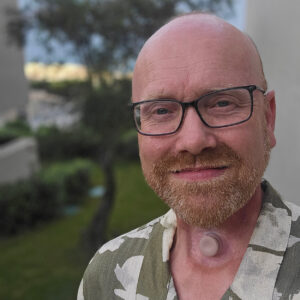
Common side effects from Head and Neck Cancer treatment...
Your voice might get hoarse or husky if you have radiotherapy treatment to your voice box for cancer of the larynx. It could disappear completely for a while during and after the treatment. It should come back within a few weeks but may never sound quite the same as it was.
Radiotherapy for other types of head and neck cancer might make your voice change a little during and for a few weeks after the treatment. Your voice should go back to normal once your treatment ends.
If you lose your voice or your ability to speak clearly, it is natural to feel distressed, frustrated and angry at times.
If you lose your voice or your ability to speak clearly, it is natural to feel distressed, frustrated and angry at times.
People around you may need to learn new ways to communicate with you and take time to listen carefully. If your voice or speech has changed, some people might pretend to understand what you’re saying so they don’t upset you, or because they’re embarrassed to say they don’t understand. This can be frustrating and you may feel uncomfortable or alienated.
+ Loss of Speech
Some people lose the ability to speak clearly or produce voice due to surgery to their mouth or the removal of their larynx. You may find it helpful to:
- gesture, point, nod, smile, or mouth words
- ring a bell to call people
- write on a pad or whiteboard, or point to pictures on a board
- use a computer, mobile phone or other device to type messages
- use the National Relay Service – relayservice.com.au.
You will work with a speech pathologist to improve your speech and learn strategies for communicating with your family and friends.
Although this can be challenging, most people who have had surgery are able to learn techniques to talk again. A counsellor or psychologist can help you address any problems or frustrations.
+ Having Speech Therapy
Three main methods your speech therapist may try after a total laryngectomy are: Oesophageal speech -You swallow air and force it up through your oesophagus to produce a low-pitched burp. This technique may be difficult and usually requires training.
Mechanical speech – A battery-powered device creates a vibrating sound when it is held against the neck or cheek or placed inside the mouth. You press a button attached to the device when you want to speak.
Tracheoesophageal speech – Your surgeon may create a puncture between your trachea and oesophagus during the laryngectomy or later on. Your surgeon may insert a voice prosthesis (or valve) to direct air from your trachea into the oesophagus. This creates a low-pitch, ‘throaty’ voice. Talking will take time and practice. You will need to get used to the way your new voice sounds. If you are feeling self conscious about the change, counselling may help.